Stop Translating, Start Prompting: AI as a Thinking Partner
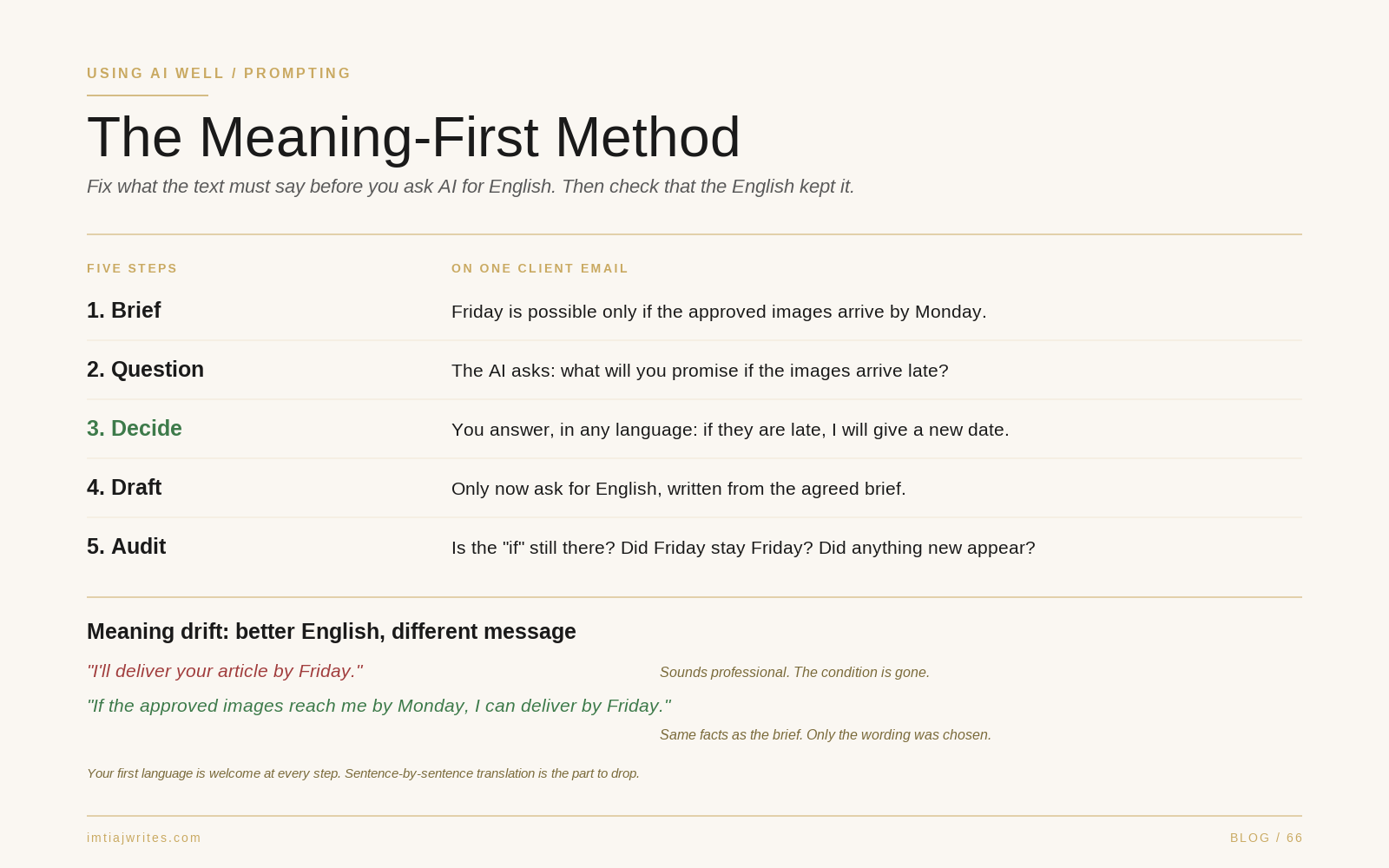
A fluent AI rewrite can quietly change what you meant. Here is a five-step way to use AI as a thinking partner, with three prompts and before/after examples.
A fluent AI rewrite can quietly change what you meant. Here is a five-step way to use AI as a thinking partner, with three prompts and before/after examples.
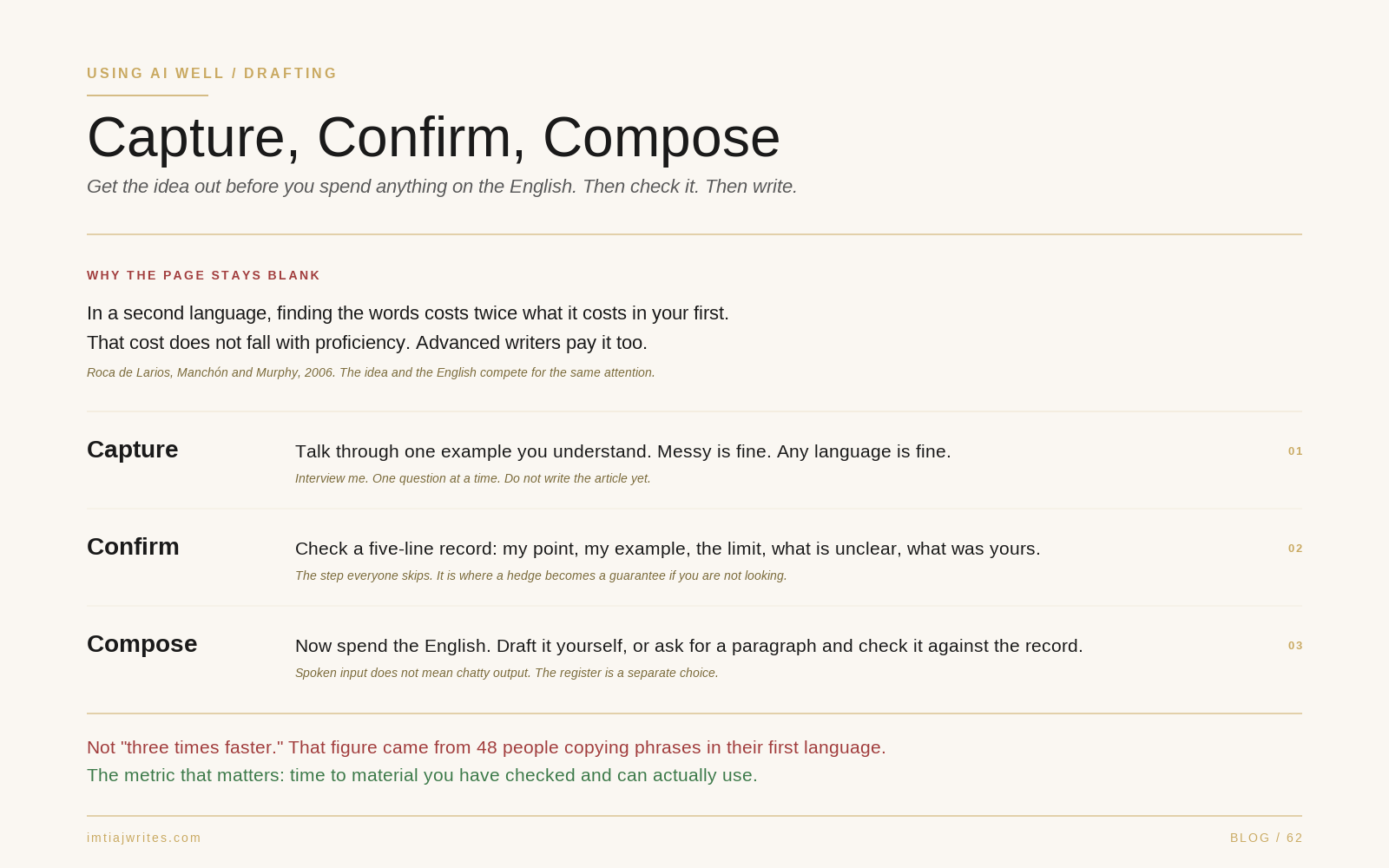
The blank page isn't an idea problem. Research shows second-language writers spend twice as long finding the words, at every proficiency level, and that cost swallows the idea. Talking first separates the two. Here is the method, the trap in it, and the honest limit.
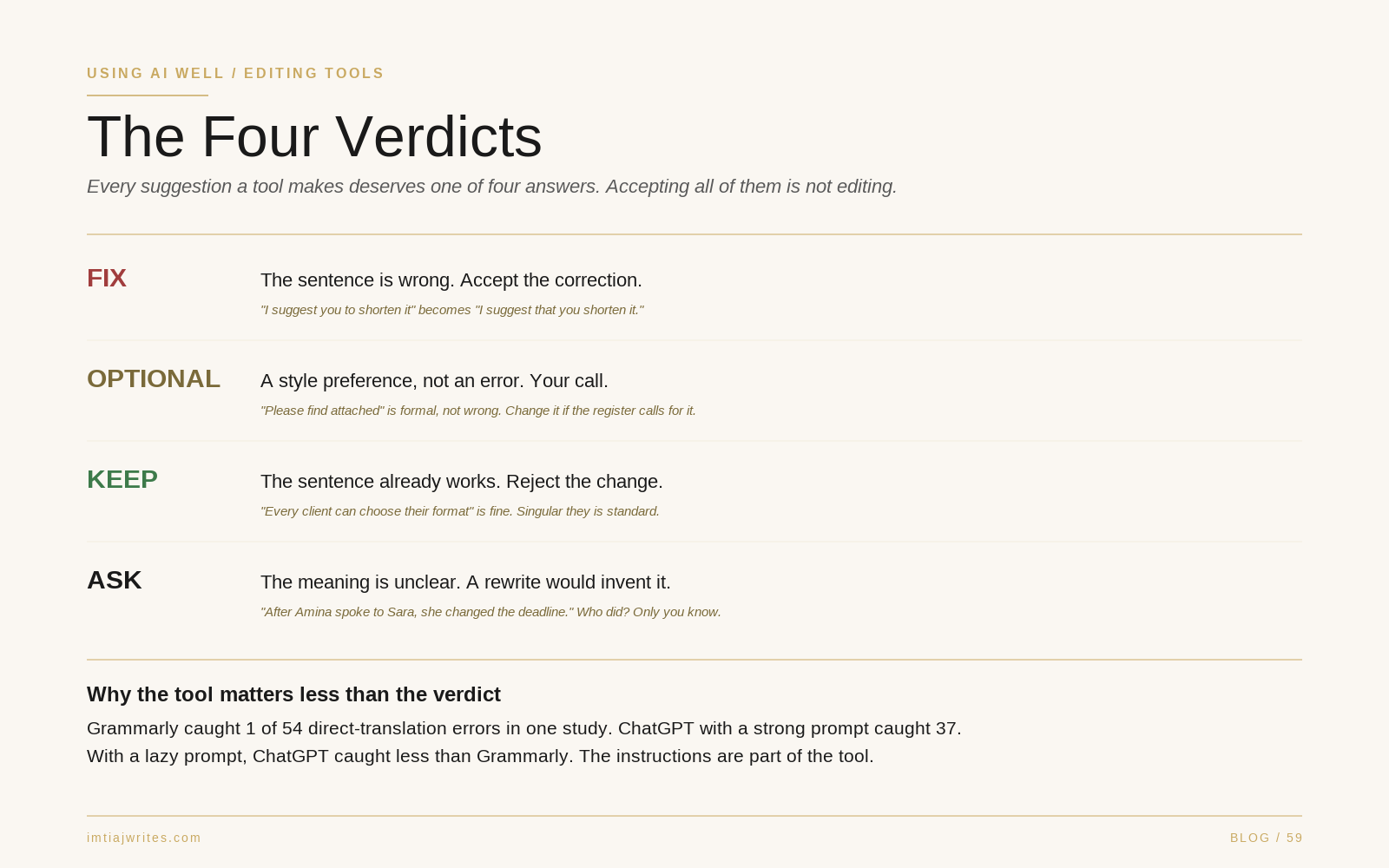
Grammarly catches the errors you can already see: articles, prepositions, spelling. The ones that make you sound translated, it barely sees at all. ChatGPT can, but only with a specific prompt, and only if you stop it flattening your voice. Here is the split, and the four verdicts that keep you in charge.
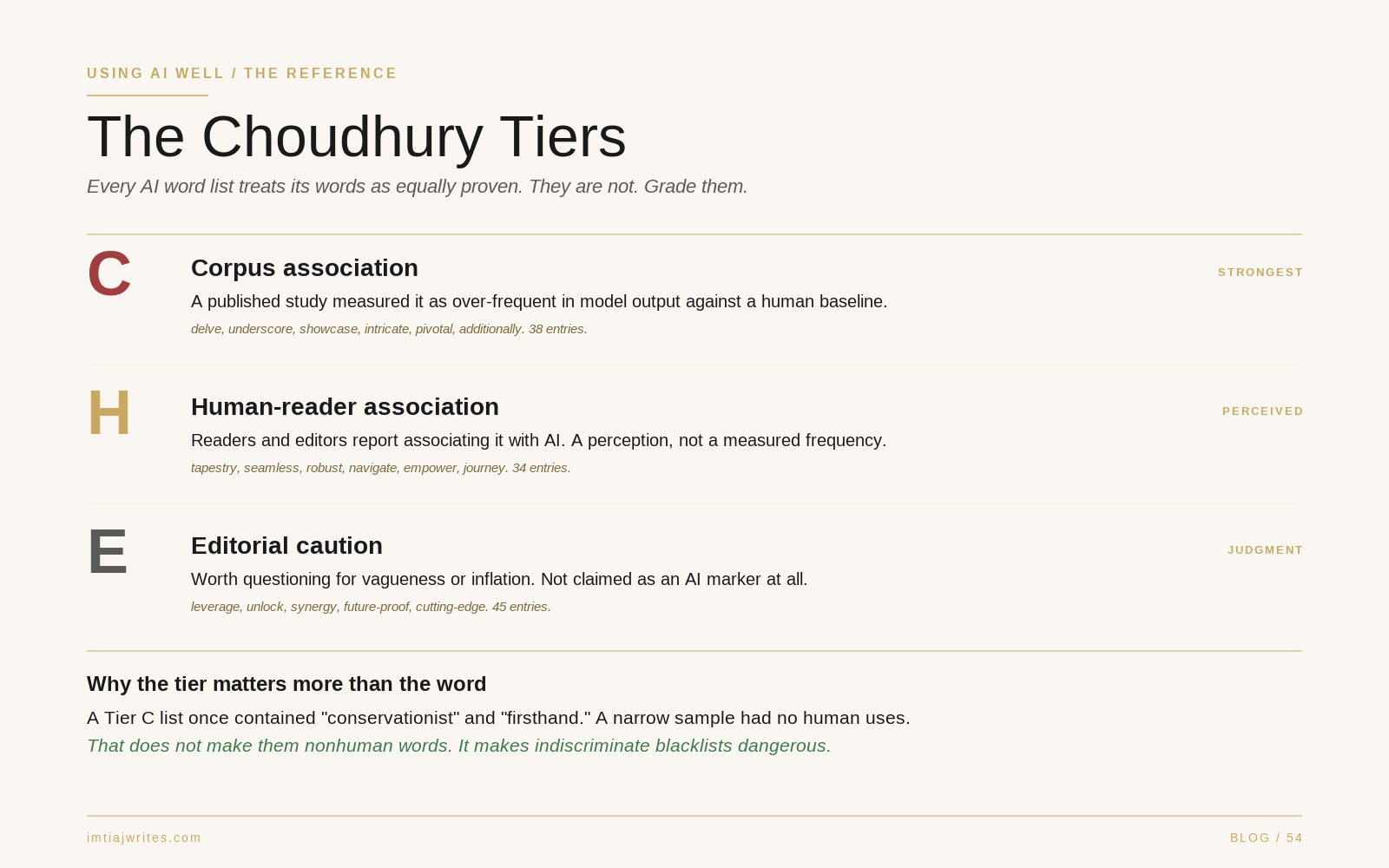
Delve is measured. Tapestry is perceived. Leverage is just a word an editor would question. Those are three different claims, and every list you've read collapses them into one. Here is the reference that doesn't, with 218 entries graded by how sure we actually are.
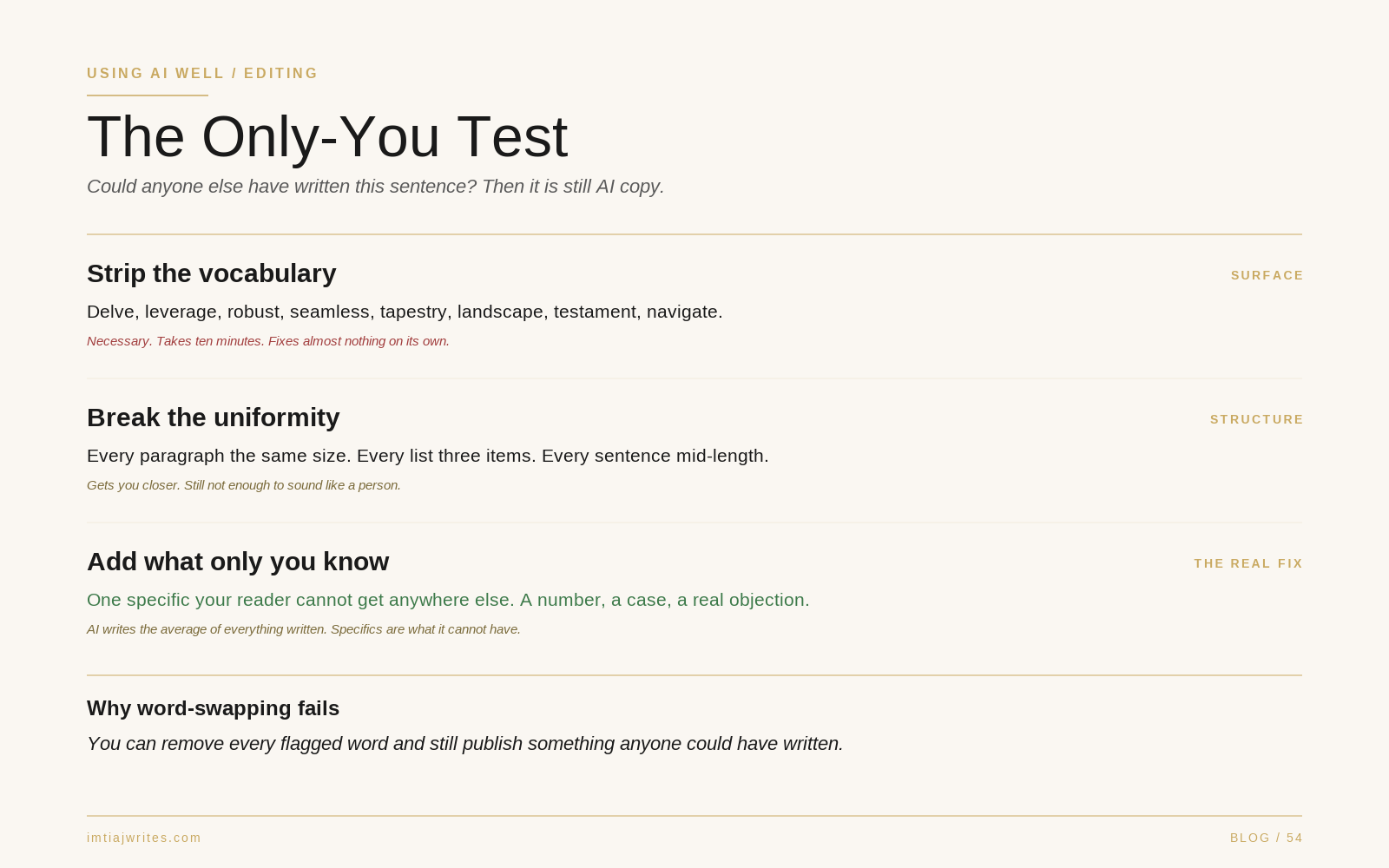
Delete every "delve" and "leverage" and the text still reads as machine-made. The vocabulary is the surface tell. The real one is that nothing in the draft could only have come from you. Three layers, in order, with the one that actually works last.
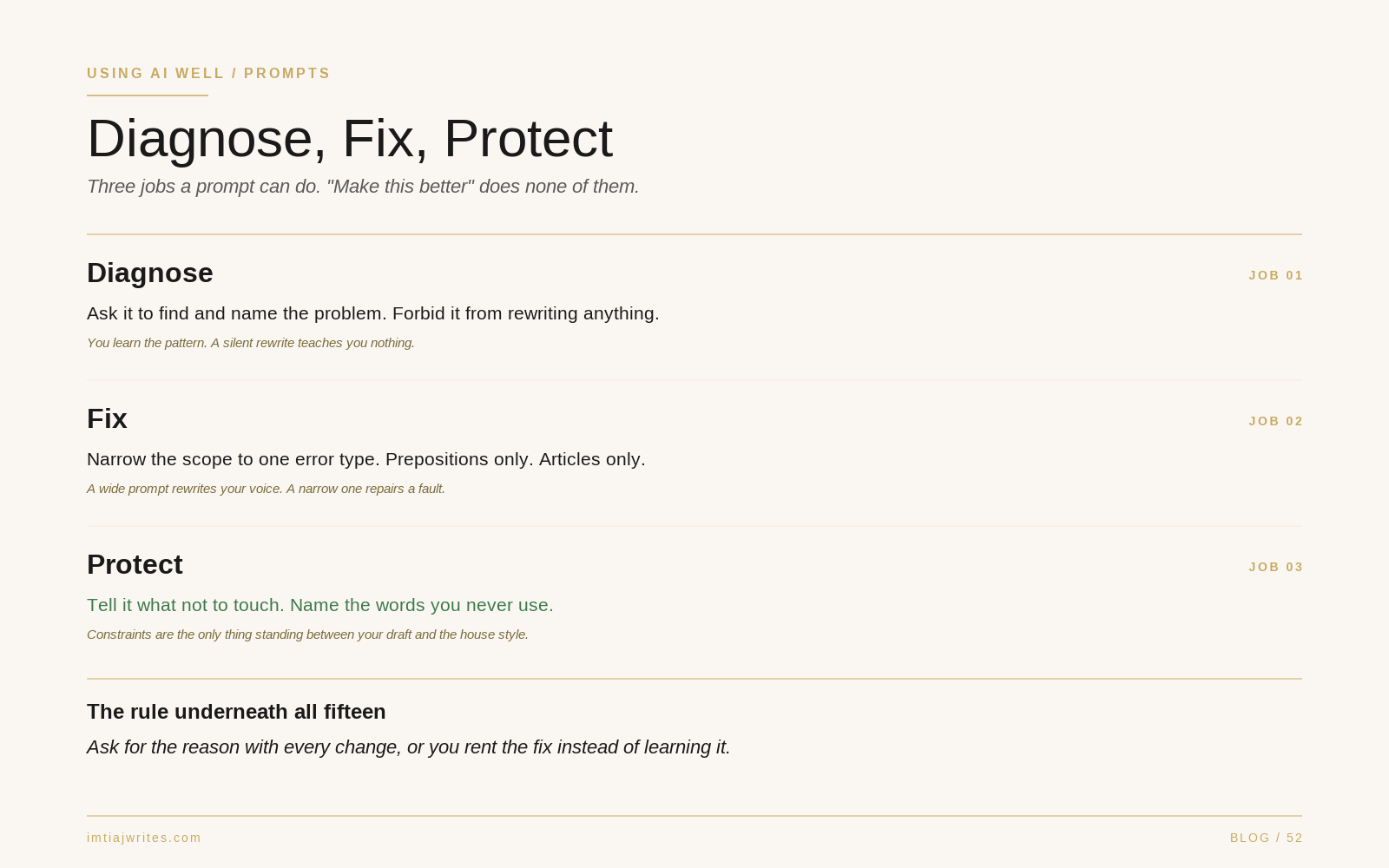
Most prompt lists give you fifteen ways to say "improve this," which is why the output always sounds like ChatGPT instead of you. These fifteen do three specific jobs, and each one shows what it actually produces.
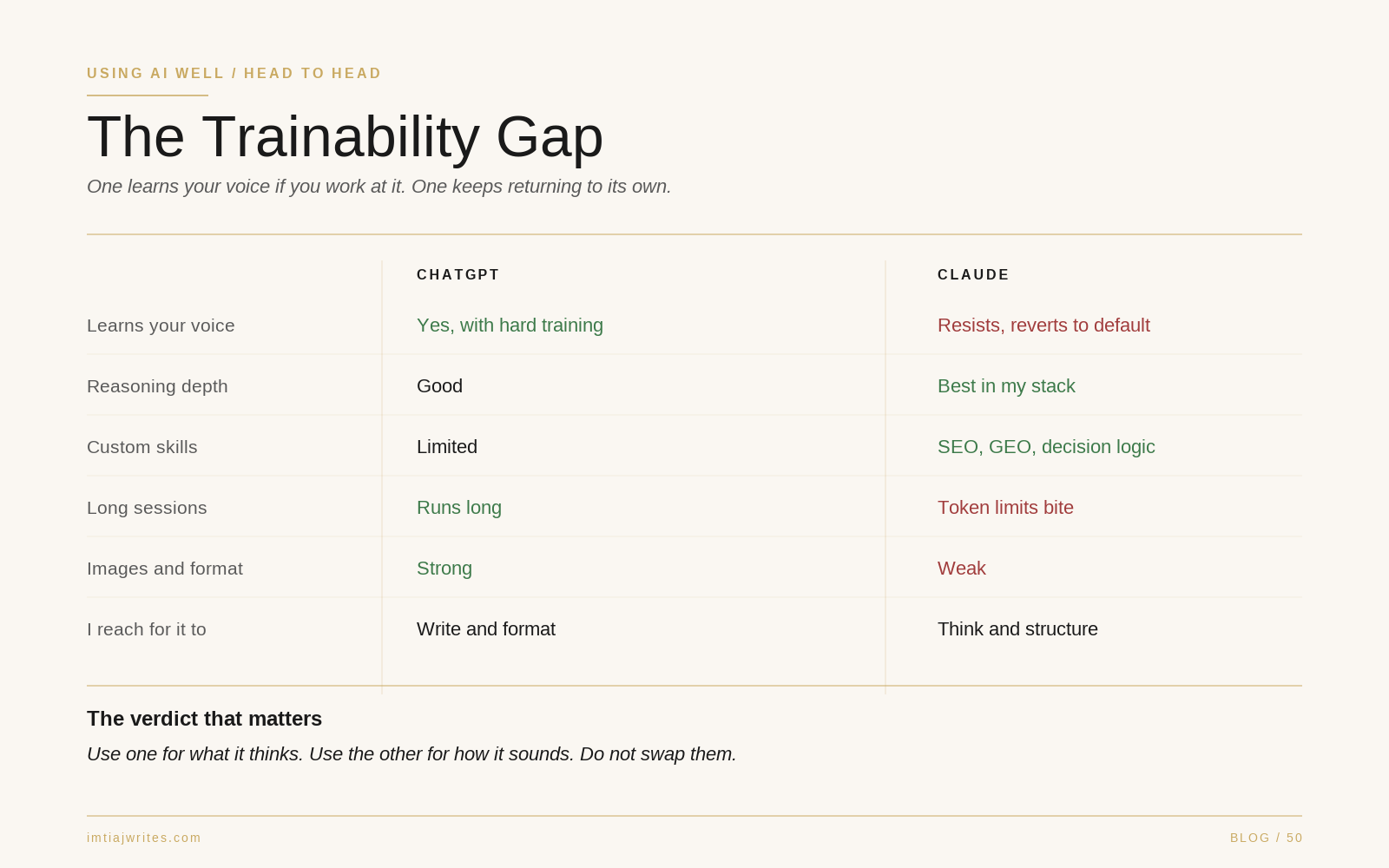
Most comparisons test first-draft quality. The question that matters for a working copywriter is different: after weeks of training, which model still sounds like you, and which one drifts back to sounding like itself?
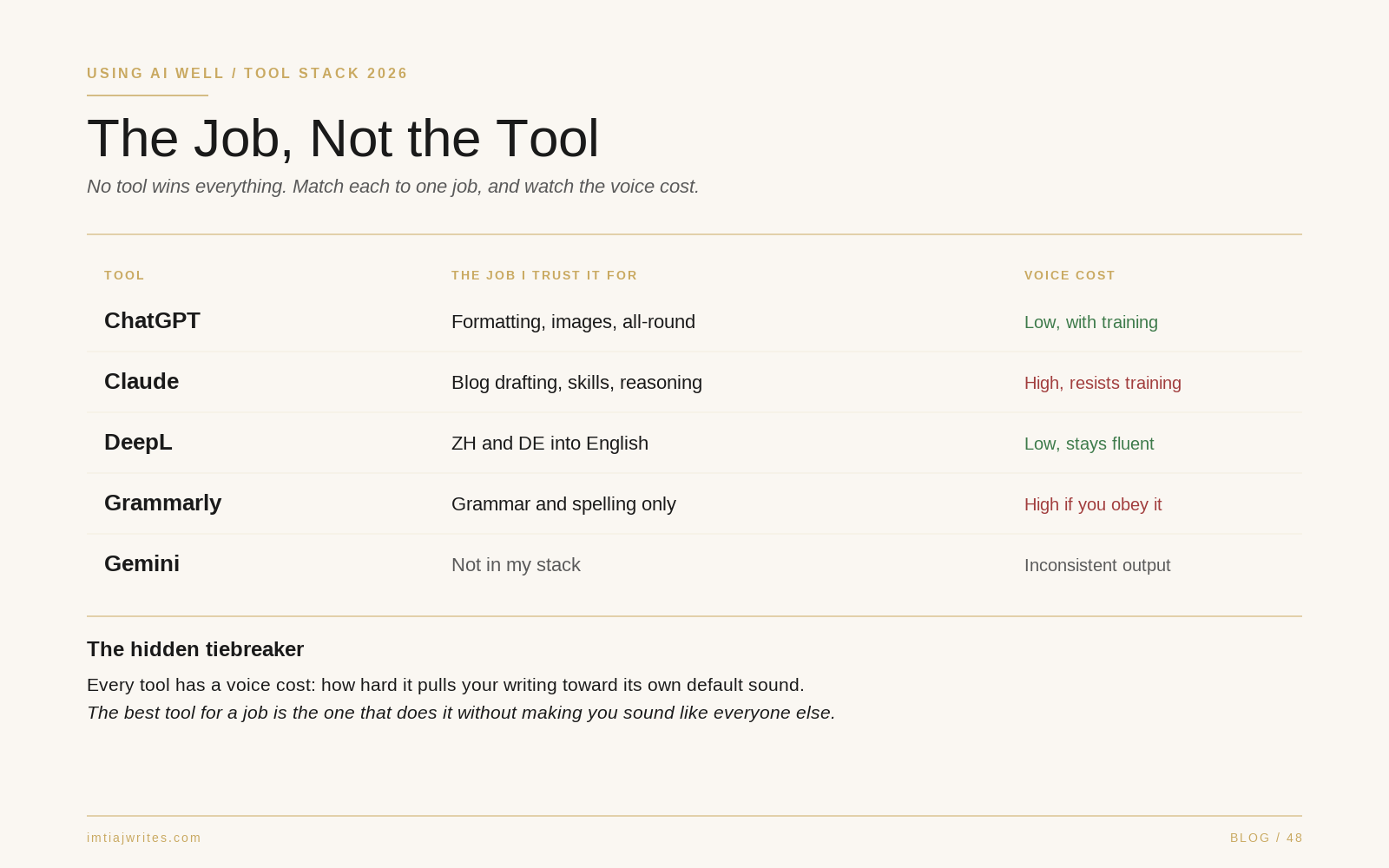
No AI writing tool wins everything, and the ones that write best for you often flatten your voice hardest. This is the stack I actually use as a non-native copywriter in 2026, the one job I trust each tool for, and the hidden cost that decides which to reach for.
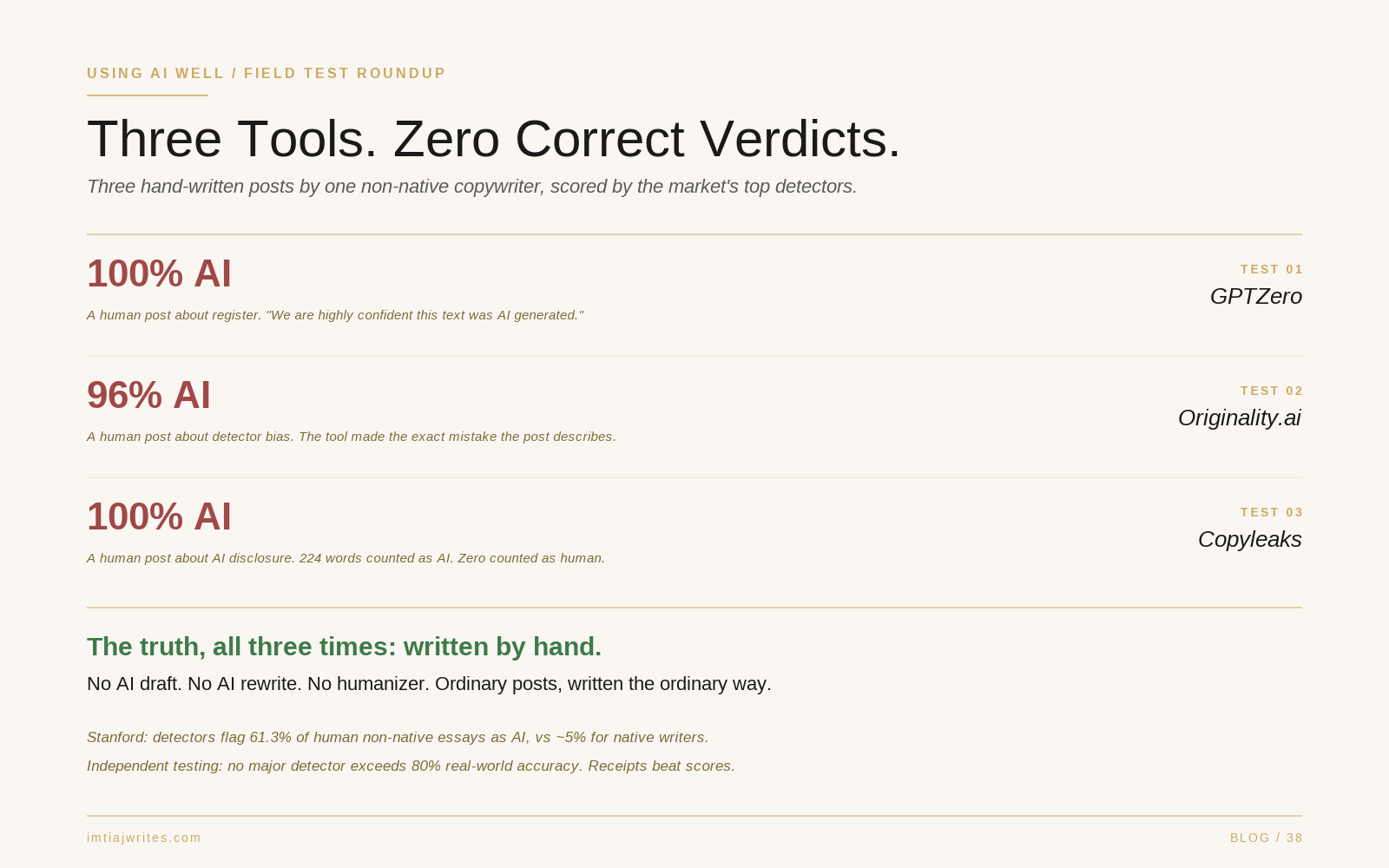
Three detectors, three of my hand-written LinkedIn posts, three confident verdicts of AI. GPTZero said 100%. Originality.ai said 96%. Copyleaks said 100%, with zero human words. The full comparison, and what it settles.
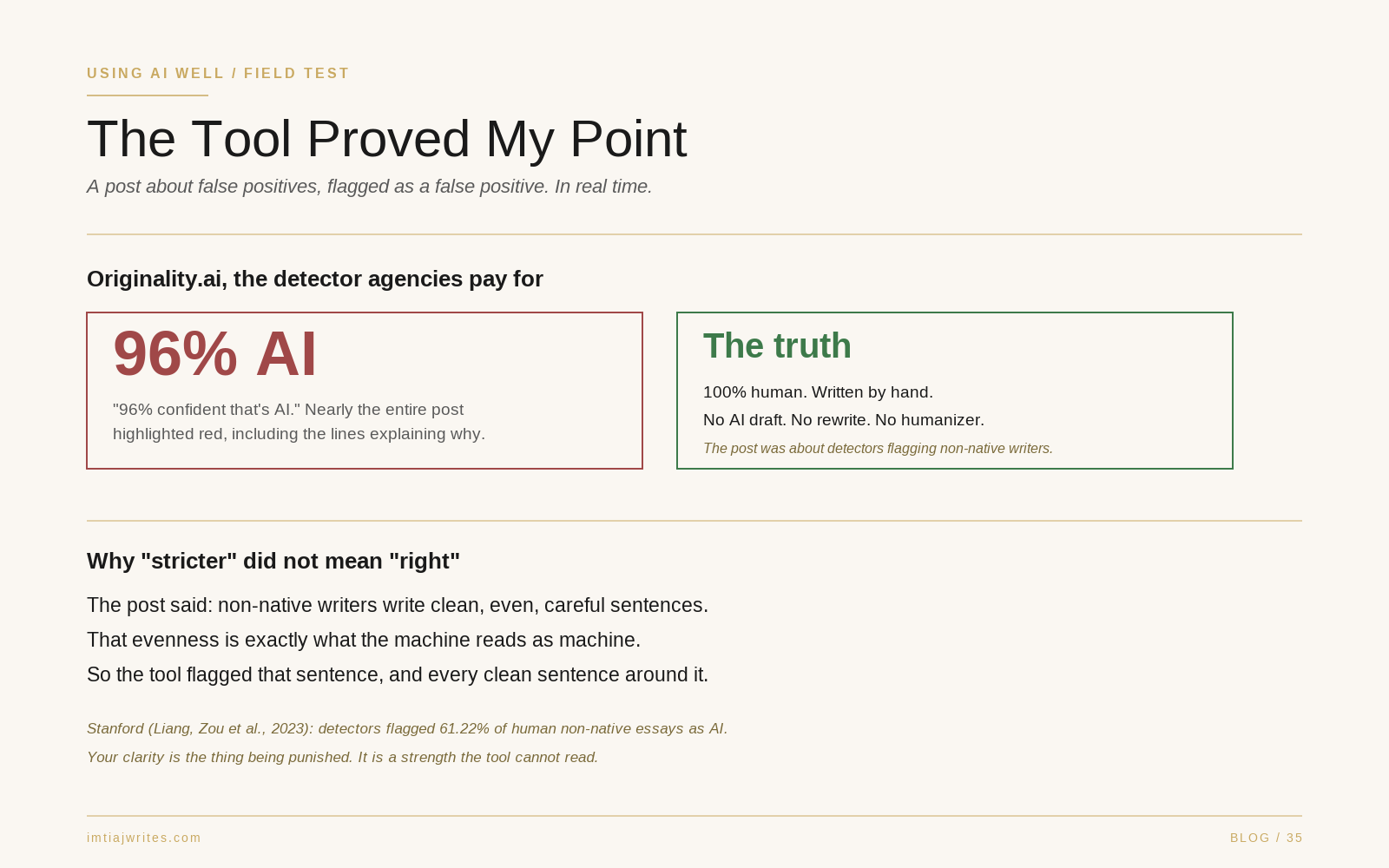
Originality.ai markets itself as the strict, accurate detector that agencies trust. I ran a post I wrote by hand through it. It came back 96% confident that's AI. Here is the result, the irony, and what it means for non-native writers.