I Analyzed 50 Job Posts Asking for “Native English.” Here’s What They Actually Want.
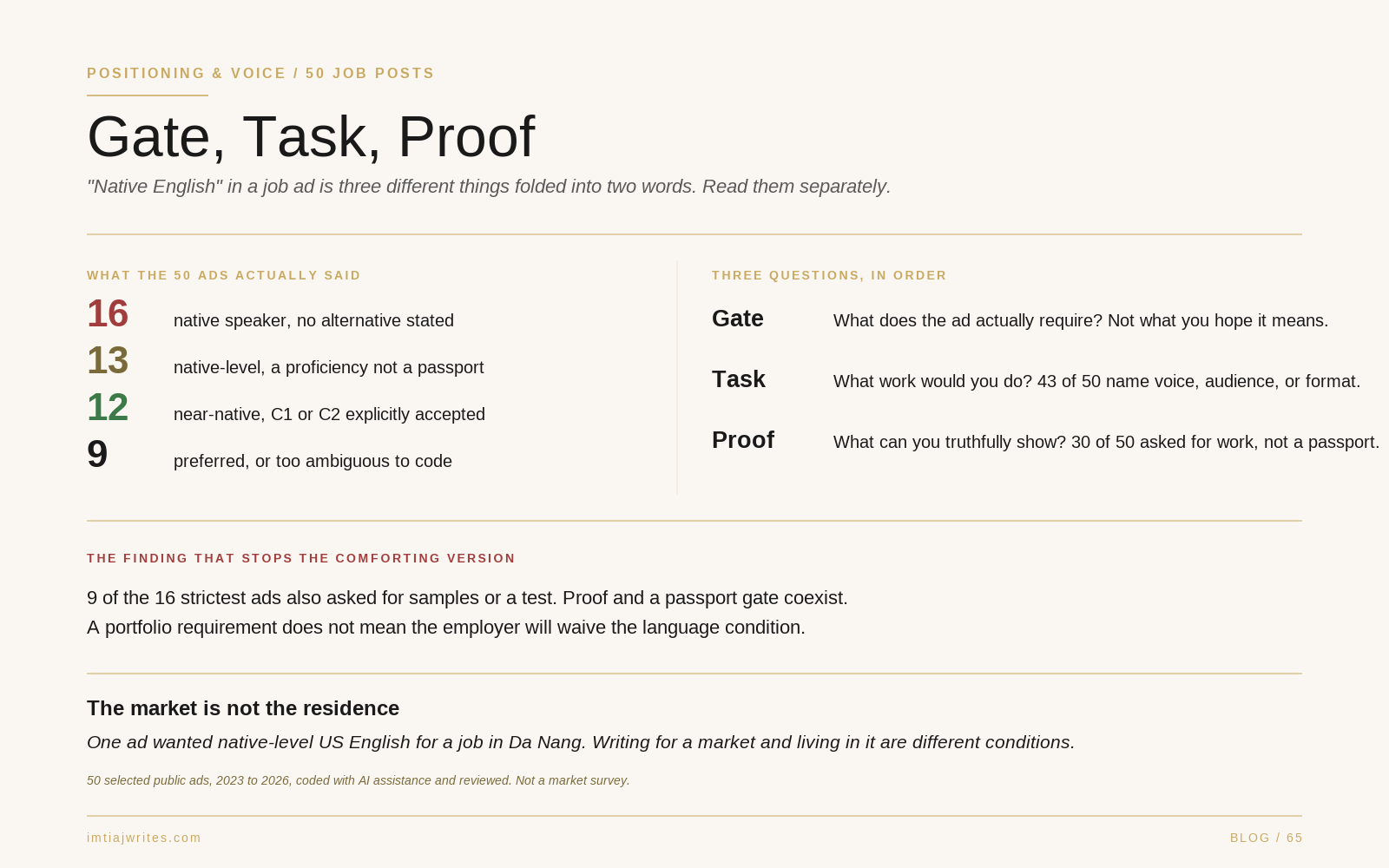
50 job ads asking for native English, sorted by what they actually ask for: the language rule, the work, and the proof. With the full dataset.
50 job ads asking for native English, sorted by what they actually ask for: the language rule, the work, and the proof. With the full dataset.
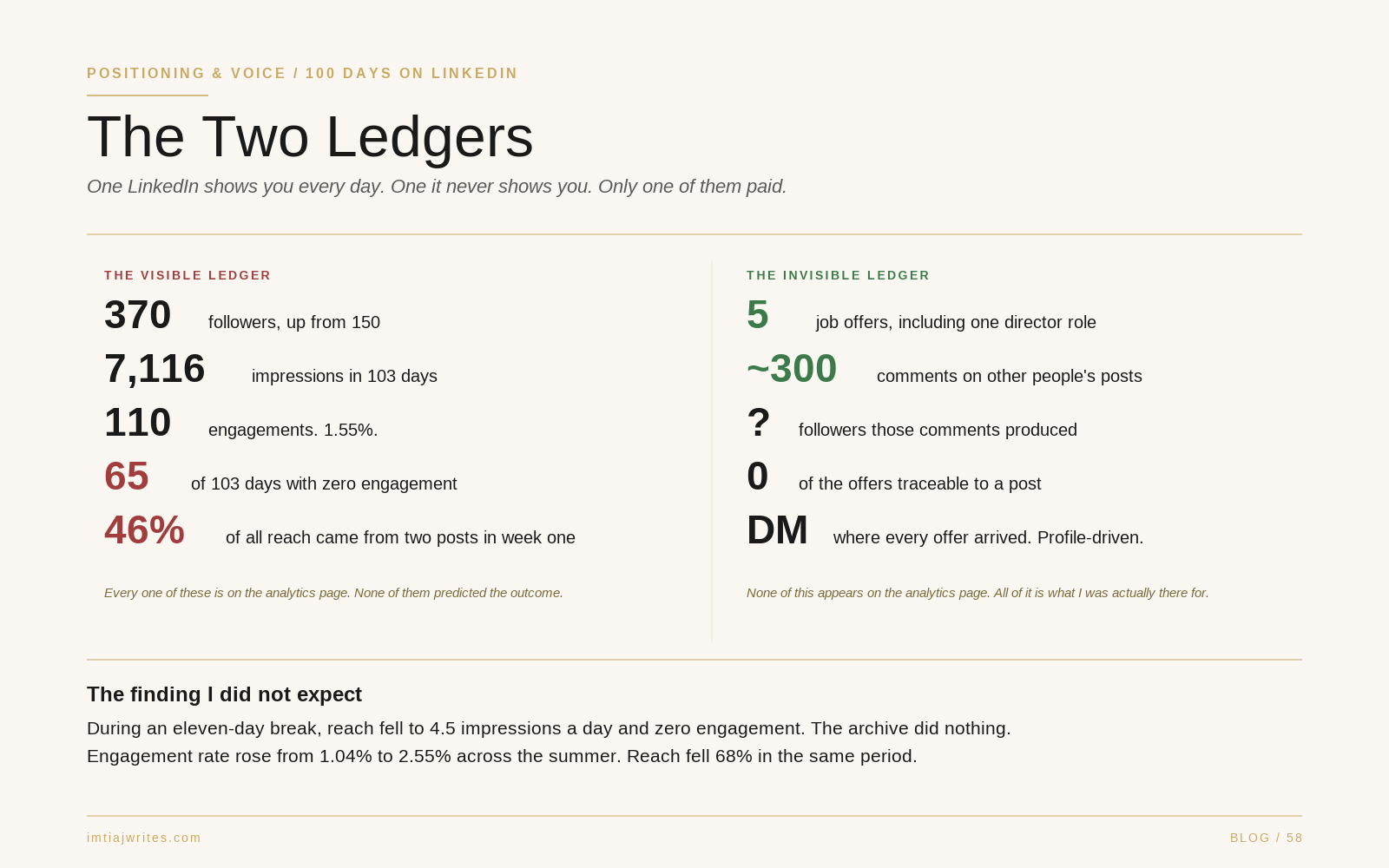
Every 100-day LinkedIn post ends with a spike. Mine ends with 370 followers, 65 days of zero engagement, an archive that did nothing during an eleven-day break, and five job offers that arrived through a channel the analytics can't see. Here is the whole export.
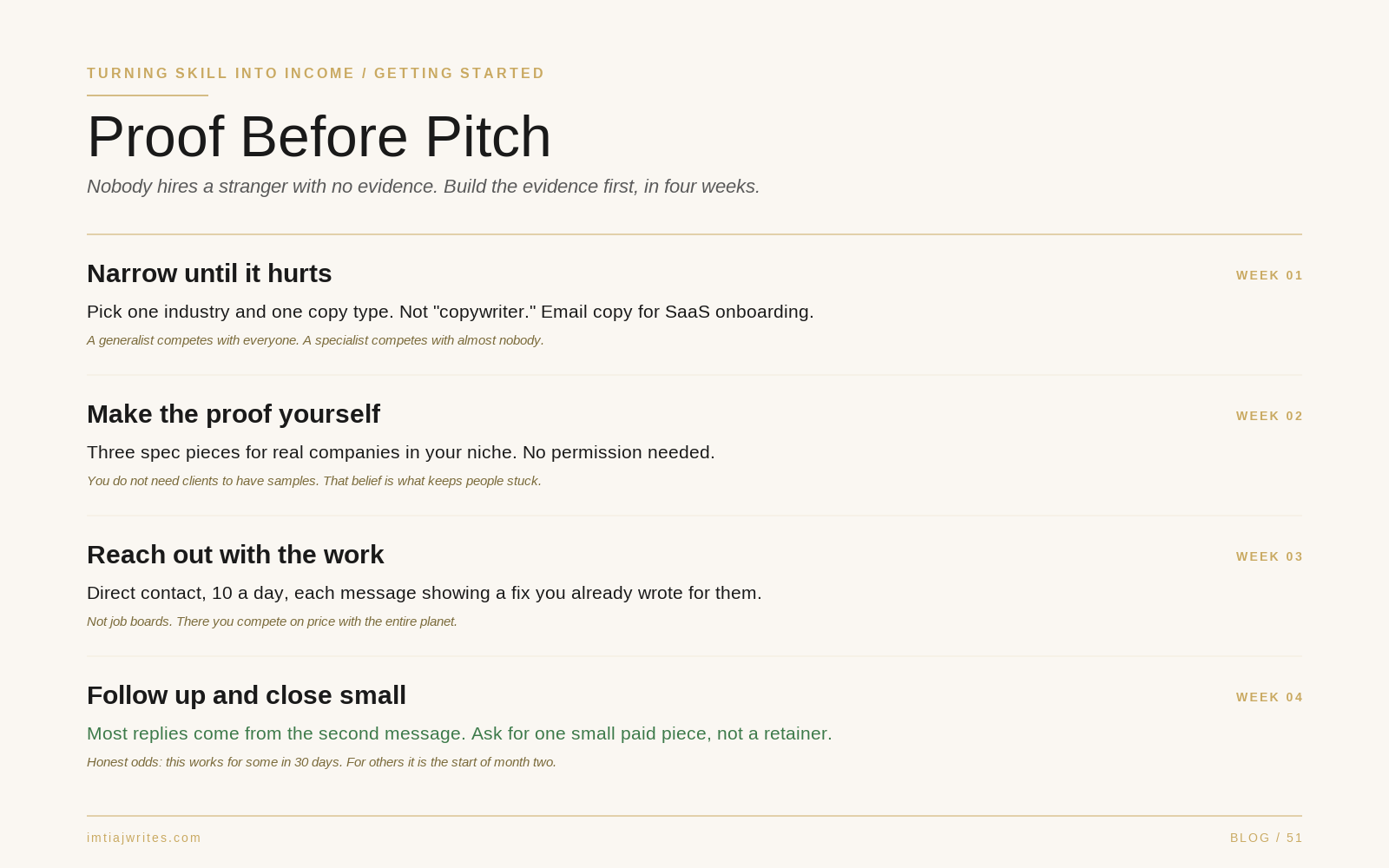
The accusation always arrives after the work is done, when it is too late to start documenting. So you build the paper trail while you write, not after. Four layers, set up once, and the question stops being frightening.
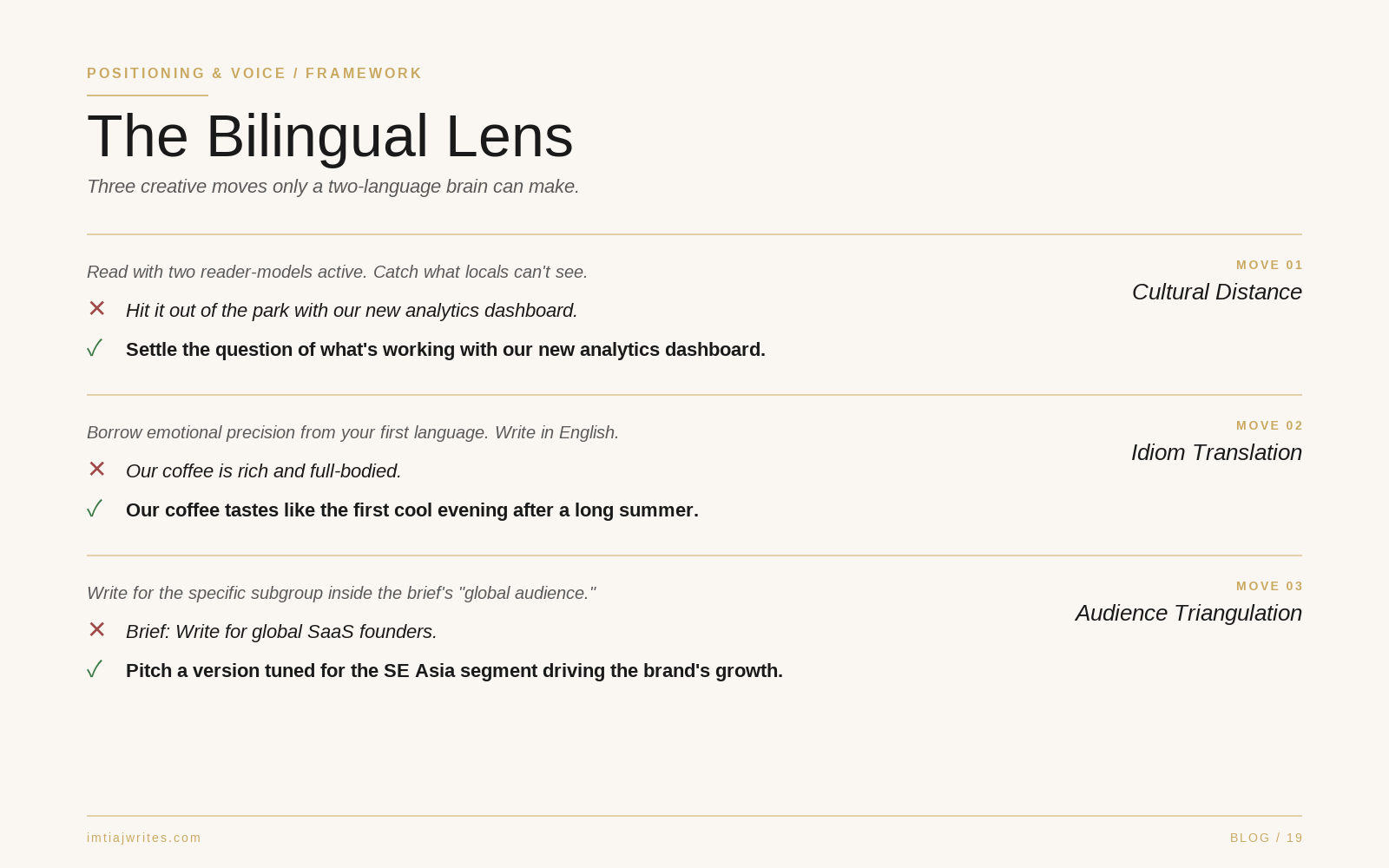
Most non-native writers treat their second language as a liability to hide. It's the opposite. Two languages give you three concrete creative moves a monolingual writer cannot make. The Bilingual Lens, in full.
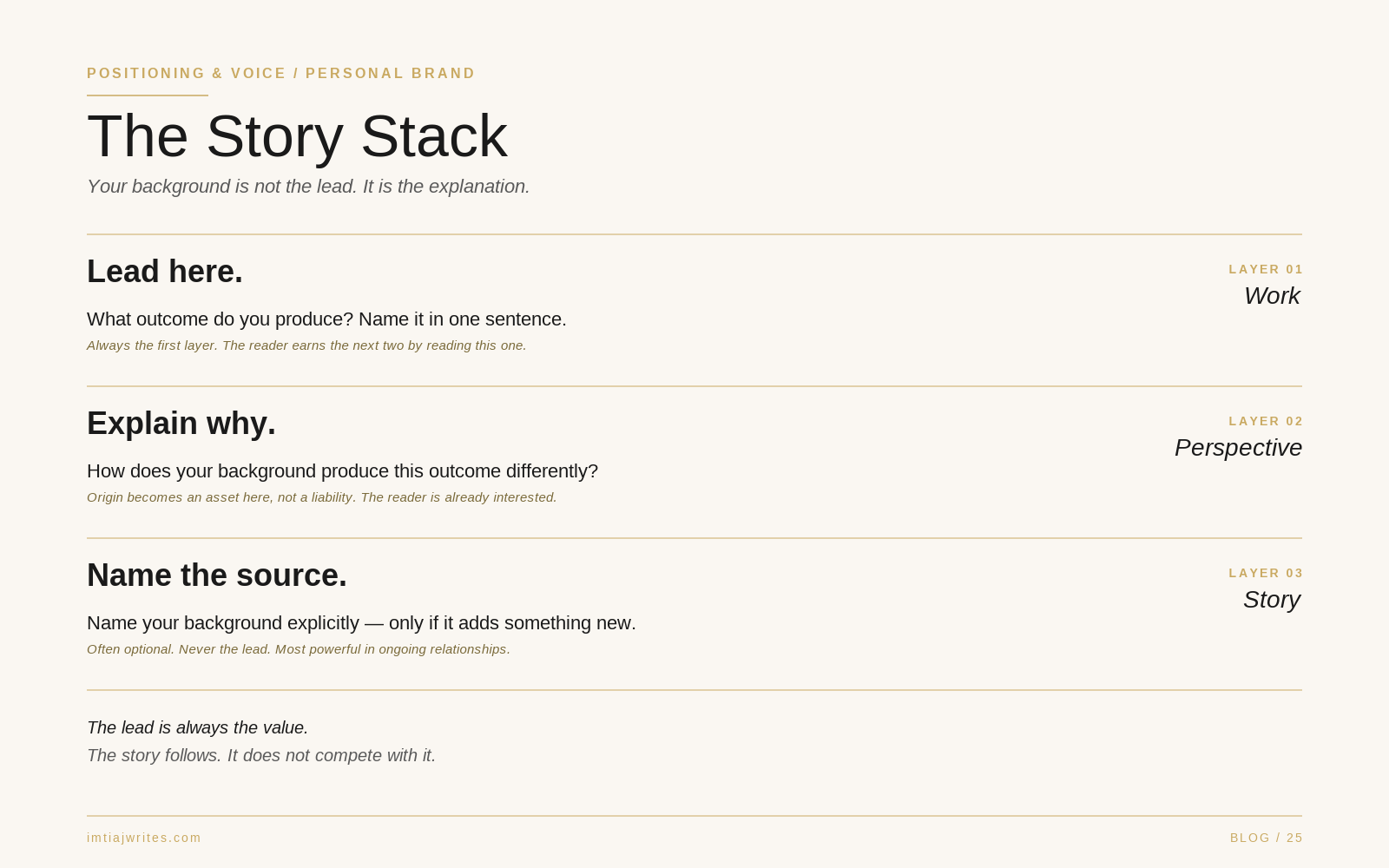
Most non-native writers face the same choice: hide where you're from and compete on neutral ground, or lead with your background and risk the wrong kind of attention. Neither instinct is fully right. This post gives you the framework to decide.
Most advice tells non-native writers to either erase their voice or celebrate it. Both miss the point. Your perspective is a situational asset — valuable in specific contexts, flat or harmful in others. Here's how to tell which is which, and how to wield it on purpose.