
Imagine you receive two briefs in your inbox on the same morning.
The first: write a 1,500-word blog post explaining how portable power stations work, for a brand’s blog. The second: write the headline and three paragraphs on the product page where that same power station is actually sold.
Same product. Same writer. The first pays maybe eight cents a word. The second, written well, can be worth ten times that. That is the whole question of copywriting vs content writing, and it is not a style question but a pay question. Most writers treat the two as the same job, and that single confusion is one of the most common reasons skilled non-native writers stay underpaid. It is fixable in an afternoon once you see it.
This is the difference between content writing and copywriting. Not a matter of style or quality. A matter of what the words are hired to do, and how directly that connects to money.
The actual difference, in one line
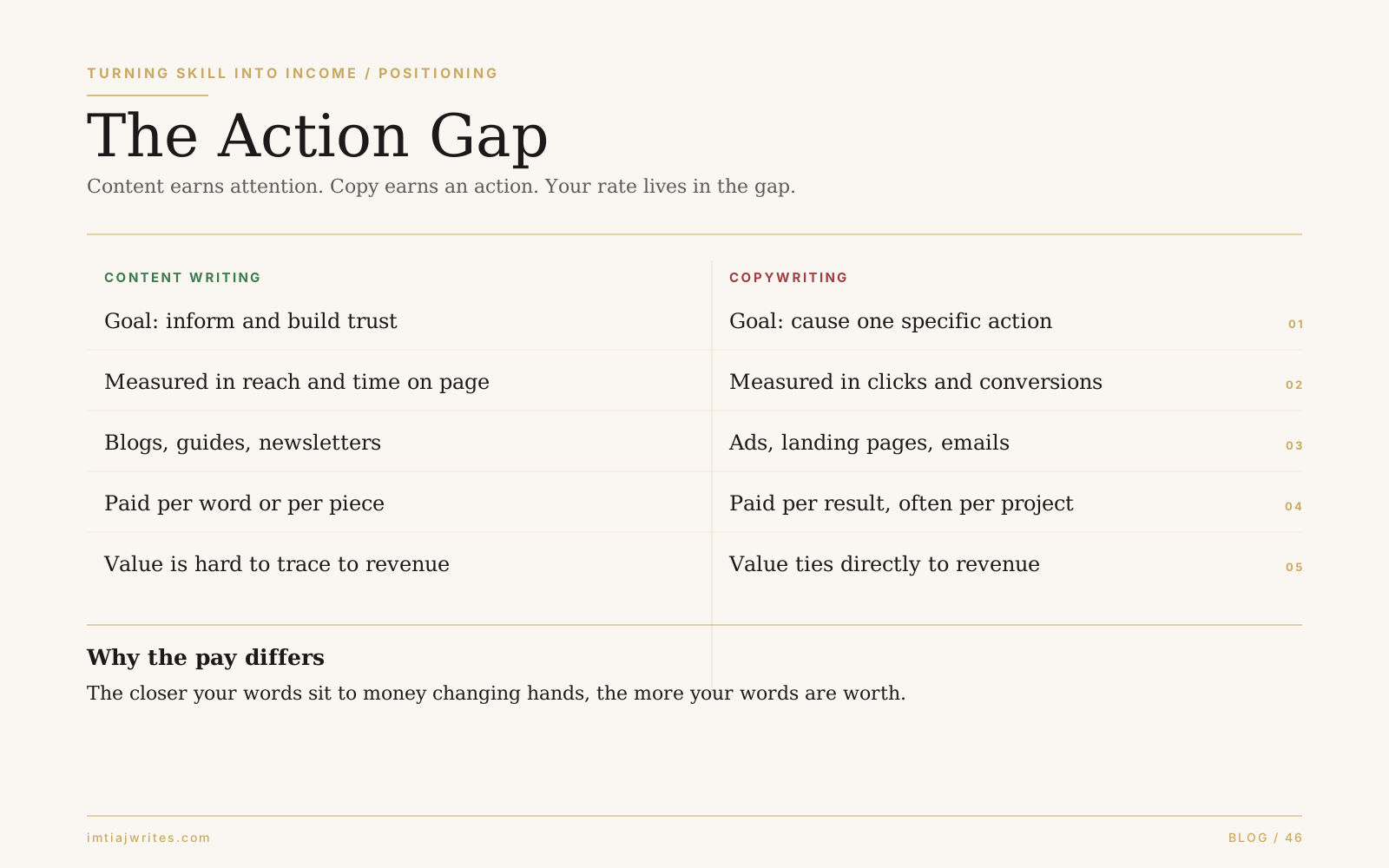
Content writing earns attention. Copywriting earns an action.
That’s the whole distinction, and everything else follows from it. A blog post, a guide, a newsletter—these exist to inform, to build trust, to bring people in and keep them reading. Success looks like reach, time on page, and a subscriber. The reader finishes more informed and slightly more loyal to the brand.
Copy exists to make one specific thing happen right now. Click this. Buy this. Sign up. Book the call. Success is a single measurable action, and the words are judged only on whether they caused it. A landing page that’s beautifully written and converts nobody is a failure. A clumsy one that doubles signups is a triumph.
I call the space between these two the Action Gap. Content lives on the attention side. Copy lives on the action side. And your rate is a function of which side of that gap your words sit on, because the closer writing sits to money changing hands, the more that writing is worth to the person paying for it.
Why copy pays more, mechanically
This isn’t about copy being harder or more prestigious. It’s about traceability to revenue, and it’s worth understanding precisely so you can act on it.
When a company pays for a blog post, the return is real but diffuse. It might rank, it might build authority, it might bring a lead in six months. Nobody can point to a specific dollar and say the post earned it. So the company pays for the input, the words, usually per word or per piece. You’re a cost.
When a company pays for a sales page or an email sequence, they can measure the outcome directly. This page converted at 3%, that version at 5%, and the difference is money they can count this week. Now you’re not a cost. You’re an investment with a return, and investments command a completely different price. A writer who lifts a checkout page’s conversion rate has a number to point at in the next negotiation. A writer who wrote twelve blog posts has a word count.
This is the mechanical core of copywriting vs content writing, and it is why the same skill earns different money.
The trap for skilled writers
Here’s where good non-native writers specifically lose money, and it’s not a language problem, it’s a positioning one.
Many strong writers are excellent at content and never learn copy, because content is what most writing jobs advertise and what most training teaches. So they get very good at the lower-paid discipline and assume the ceiling they hit is a skill ceiling. It isn’t. It’s a category ceiling. You can be the best blog writer in your niche and still earn less than a mediocre copywriter, because you’re being paid on the attention side of the gap.
The reverse trap exists too. A writer sees copy pays more and starts calling everything they do copywriting, including their blog work, without changing what the words actually do. Relabeling content as copy fools no one who reads it. The client sees a blog post with a “copywriter” invoice attached and the mismatch damages trust.
The move is not to abandon content or to relabel it. It’s to know which one a given task is, price each correctly, and deliberately build the copy skill that lets you take the higher-paid work when it appears.
How to tell which one you’re writing
Ask one question of any brief: what is the single action this piece is supposed to cause?
If you can name a specific action, click, buy, book, subscribe, and the piece is judged on causing it, you’re writing copy. Price it on the outcome.
If the honest answer is “there’s no single action, it’s meant to inform or build trust or rank,” you’re writing content. Price it on scope.
Watch what changes in the writing itself when the job changes:
❌ Our power station offers a range of features designed to meet the needs of modern households.
✅ Run your fridge, router, and lights for three days. No noise, no fumes, no wiring.
The first informs. It’s not wrong for a spec section in an article. The second is built to push a hesitating buyer over the line, and it’s the version that belongs on the page where money changes hands. Same product, two jobs, and only one of them is copy.
Here’s the same shift on a call to action:
❌ For more information about our services, please visit our website.
✅ See what your first month looks like. It takes two minutes.
The first is content’s default: informative, passive, actionless. The second names the action and lowers the cost of taking it. That’s copy doing its actual job.
What to do with this
Three concrete moves, in order.
First, audit your current work. Sort every piece you write into content or copy using the single-action test. Most underpaid writers discover they’re doing almost entirely content and pricing all of it per word. That diagnosis alone is worth money.
Second, price the two differently. Content can stay per word or per piece, that’s fair for what it does. Copy should be priced per project or, when you can, tied to the result, because that’s how its value actually shows up for the client. Charging copy rates for copy work is not a raise, it’s a correction.
Third, build the copy skill deliberately if you don’t have it. It’s a learnable discipline with its own patterns, not a talent you either have or don’t. The foundations of persuasive structure and action-first writing are covered across the copywriting fundamentals on this blog, and they transfer directly to higher-paid work.
The words you already write are more valuable than your invoice says, but only for the ones sitting on the action side of the gap. Learn to see the gap, and you stop selling copy at content prices.
Frequently Asked Questions
What is the difference between copywriting and content writing?
Content writing earns attention, and copywriting earns an action. Content, such as blogs, guides, and newsletters, exists to inform and build trust, and is measured by reach and engagement. Copy, such as ads, landing pages, and sales emails, exists to cause one specific action like a click or purchase, and is measured by whether it does.
Does copywriting pay more than content writing?
Generally yes, because copy connects more directly to revenue. A company can measure the exact outcome a landing page or email produces, so they treat that writing as an investment with a return, which commands higher rates. Content’s value is real but harder to trace to specific dollars, so it is usually paid per word or per piece.
How do I know if I am writing copy or content?
Ask what single action the piece is meant to cause. If you can name a specific action it is judged on, like buy or book or subscribe, it is copy. If the goal is to inform, build trust, or rank without one clear action, it is content. Price each accordingly.
Can I charge more by calling my content writing copywriting?
No. Relabeling content as copy without changing what the words do is transparent to any client who reads the work, and the mismatch damages trust. The way to charge more is to actually do copy work, which serves a different purpose, and to price that work on its outcome.
Is copywriting harder to learn for non-native English writers?
Not inherently. Copy relies on structure, clarity, and understanding what moves a reader to act, which are learnable and less dependent on native-level fluency than you might expect. Short, direct, action-focused sentences are often easier for non-native writers than the long, flowing prose content sometimes demands.
Where to go next
👉🏼 For the copywriting foundations that transfer to higher-paid work, see the three mistakes that mark non-native copy.
👉🏼 For making your copy sound native, not translated, see unlearning school English.
👉🏼 For the editing method that sharpens both content and copy, see the two-pass edit.
👉🏼 For why short, direct sentences read as professional, see sentence length and non-native writing.
Content earns attention. Copy earns an action. Price your words for the job they actually do.
