
You’ve probably had this feedback: “It’s correct, but it sounds a bit formal.” Or worse, the silence, where a native colleague quietly rewrites your paragraph and you can’t say what changed. Nothing was wrong. That’s the confusing part.
Here’s what’s happening. School English and professional English are two different languages that happen to share a grammar. School rewarded you for one set of habits. Work rewards the opposite set. You didn’t learn English badly. You learned it for a test you already passed, and nobody told you the rules change after the exam.
I call this gap the Register Gap, and once you see it you stop trying to fix your grammar and start fixing the thing that’s actually off.
Why school English sounds stiff at work
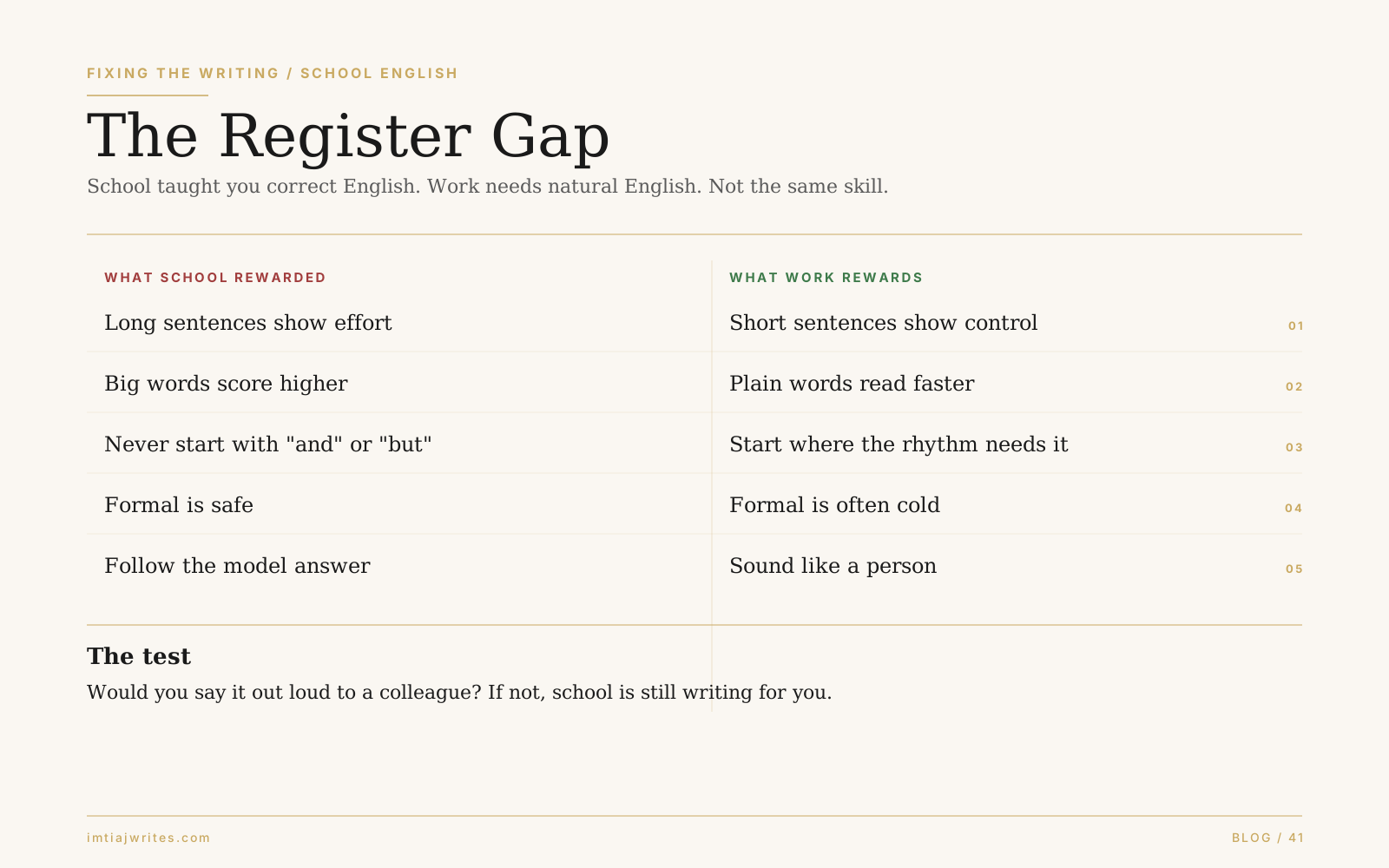
Think about what earned marks in an English class. Longer sentences looked like effort. Bigger words looked like range. Starting a sentence with “and” or “but” got a red line through it. Formal was always the safe choice, because formal never got marked down. You were writing for one reader, an examiner, whose job was to catch mistakes.
Your professional reader is the opposite of an examiner. They are busy, skimming, and deciding in seconds whether your email is worth their attention. They are not hunting for errors. They are hunting for the point. Every habit that pleased the examiner slows this reader down. The long sentence that showed effort now buries your ask. The big word that showed range now makes them reread. School trained you to impress a marker. Work needs you to move a busy person.
This is why “your grammar is fine” and “this sounds off” are both true at the same time. The grammar answers the examiner. The stiffness fails the colleague.
The five habits to unlearn
These are the school rules that quietly sabotage professional copy. Each one felt correct when you learned it.
Long sentences show effort. School rewarded the complex sentence. Work rewards the sentence a reader finishes in one breath.
❌ In order to ensure that all stakeholders are aligned prior to the launch, we will be conducting a series of meetings throughout the coming weeks.
✅ We’ll meet over the next few weeks to get everyone aligned before launch.
Big words score higher. The exam gave credit for range. Your reader pays a small tax on every word that makes them slow down.
❌ We endeavour to facilitate a seamless onboarding experience for all new personnel.
✅ We want new hires to have an easy first week.
Never start with “and” or “but.” A real school rule, and wrong for professional writing. Starting with a conjunction is how natural English controls rhythm.
❌ The results were strong. However, there remain several areas which require further attention.
✅ The results were strong. But a few things still need work.
Formal is always safe. Formal is safe from being marked wrong. It is not safe from sounding cold, which is a worse failure in an email a human has to feel something about.
❌ Please be advised that your request has been received and is currently being processed.
✅ Got your request. We’re on it.
Follow the model answer. School gave you a template to match. Professional writing wants the opposite, a sentence that sounds like a specific person wrote it, not a form.
❌ I am writing to express my interest in the aforementioned position.
✅ I’d love to be considered for this role, and here’s why.
Look at every ✅ version. None of them is less correct than the ❌. They are the same information, unlearned back into speech.
The trap inside the trap
Here is the part that keeps non-native writers stuck longest. When your professional copy gets flagged as stiff, the instinct is to add more school. More formality, more careful construction, more distance, because school taught you that formal equals professional. So you climb in the wrong direction. The stiffer it sounds, the harder you polish the stiffness.
The pattern I want you to catch is this: the fix for stiff writing is almost never more correctness. It’s more voice. You already have the grammar. What school removed was permission to sound like yourself, and that permission is the actual skill professional writing needs.
This connects to a larger idea worth reading next, the layers that sit above fluency. Fluency gets you correct. Register, rhythm, and voice get you read.
The one test that catches it
You don’t need to memorize five rules while you write. You need one question at the edit stage.
Read the sentence out loud. Would you actually say it to a colleague standing next to you?
If yes, it’s alive. If you’d never say it out loud, if it only exists in writing, that’s school English still writing for you. “Please be advised” fails instantly. Nobody has ever said “please be advised” to another human in a hallway. “Got your request, we’re on it” passes, because you can hear yourself saying it.
This test works because speech is the register your professional reader actually wants. Not slang, not casual, just the sound of a competent person talking to another competent person. School spent years training that sound out of your writing. You get to train it back, and it’s faster than the years it took to lose it.
You are not unlearning English. You are unlearning the exam. What’s left underneath is the writer your colleagues have been waiting to hear.
Where to go next
👉🏼 For the layers that sit above fluency, where register and rhythm live, see the four layers above fluency.
👉🏼 For the broader set of habits that mark non-native copy, see the three mistakes that mark non-native copy.
👉🏼 For fixing the specific stiffness AI tools add back, see the voice-preservation prompt framework.
👉🏼 For the diagnostic on your own drafts, the Natural English Edit is the 15-pattern checklist with prompts to run on your own writing. Free.
Countable habits, one test. Say it out loud to a colleague. If you wouldn’t, school is still writing for you, and now you know how to take the pen back.
Frequently Asked Questions
Why does my correct English still sound unnatural at work?
Because correctness and naturalness are different skills. School trained you to satisfy an examiner looking for mistakes. Professional readers want speed and voice, not formality. Your grammar can be perfect while your register is wrong, and register is what makes writing sound natural.
Is formal English bad in professional writing?
Not bad, but overused. Formal English is safe from being marked wrong, which is why school defaults to it. In real work it often reads as cold or distant. Match formality to the situation instead of reaching for it automatically.
Can I start a sentence with “and” or “but”?
Yes. The school rule against it does not apply to professional or natural writing. Starting with a conjunction is a normal tool for controlling rhythm and emphasis. Use it deliberately, not constantly.
How do I make my writing sound more natural?
Read each sentence out loud and ask whether you would say it to a colleague. If you would never speak it aloud, rewrite it until you would. Speech is the register most professional writing is aiming for.
Does unlearning school English mean being casual or using slang?
No. It means writing the way a competent professional actually talks, clear and direct, not stiff and not sloppy. You are removing exam-room formality, not adding slang.
